

Contactless Cardiovascular Monitoring via Computer Vision
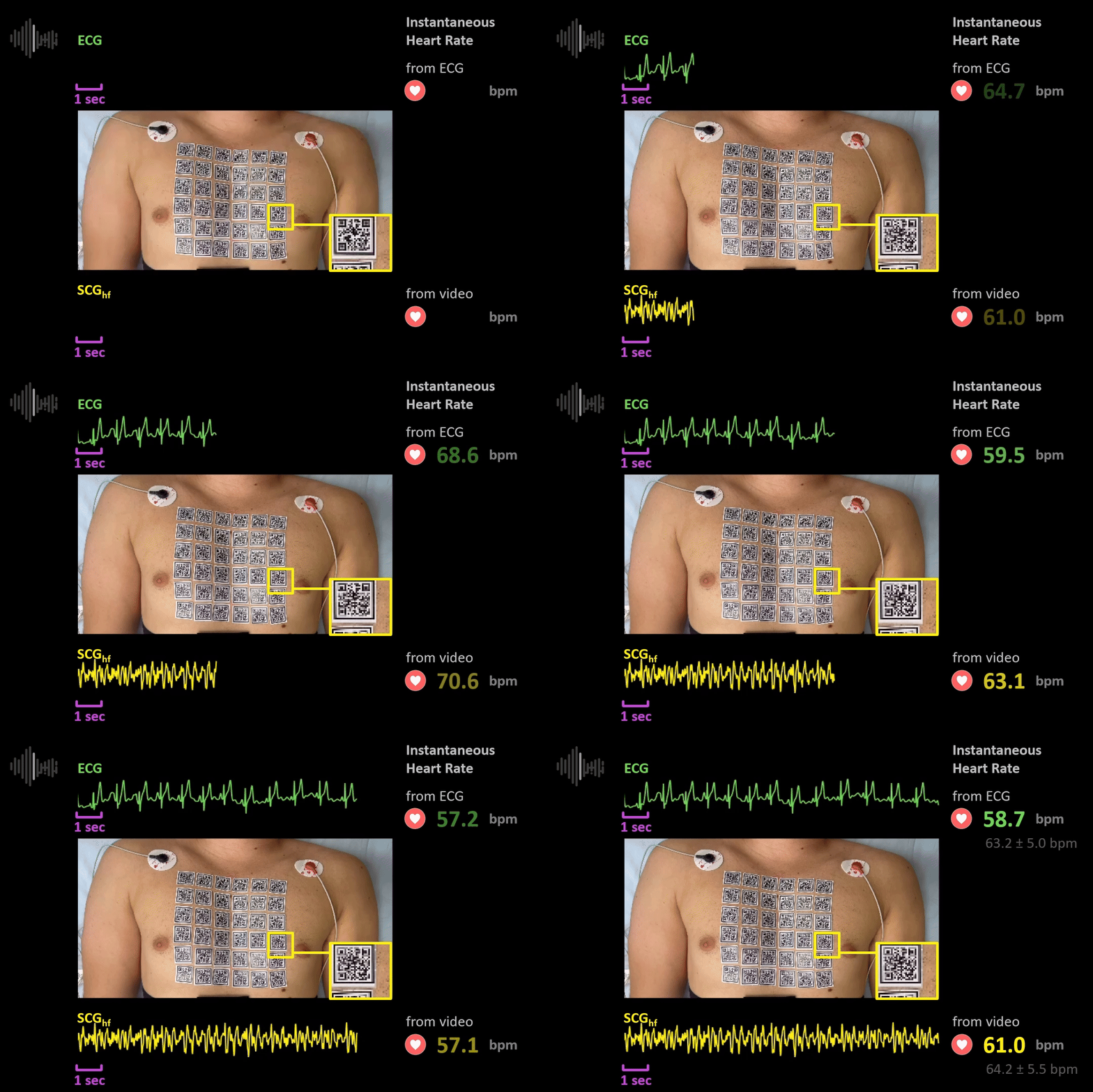
visionSCG turns ordinary cameras, including smartphones, into tools for measuring the heart's mechanical activity without touching the body. Each heartbeat produces tiny vibrations of the chest wall, usually recorded as the seismocardiogram (SCG) with an accelerometer attached to the chest. We extract these vibrations from video instead: first by tracking small stickers on the chest, then without any markers using optical flow, and most recently as multichannel SCG maps across the chest, sharpened with deep learning. Each method is validated in human subject studies against simultaneous accelerometer and ECG recordings.
We also estimate heart rate and heart rate variability from videos of the neck, a more privacy-friendly alternative to the face, and develop signal processing and deep learning methods for SCG, such as identifying heart valve events without an ECG and reconstructing three-axis SCG from two axes.

Develop contactless methods for the monitoring of cardiovascular activity based on cardiovascular-induced vibrations of the body surface

Principal Investigator


We develop a technology that transforms ordinary smartphone cameras into cardiac imaging tools, enabling the extraction of key cardiac health metrics from simple chest videos.



Take part in our research
cardioVibe is a human subject study that supports visionSCG. In a single visit, we record the tiny vibrations your heart makes on your chest using noninvasive sensors and a camera. These recordings help us develop and test contactless ways to monitor the heart.
We design intelligent medical decision-making solutions to improve health equity.
111 Research Dr., Rm. C346, Bethlehem, PA 18015
+1 (610) 758-4096
taebilab@gmail.com
© TaebiLab. All Rights Reserved.
Adapted from a design by HTML Codex