Research

My current research focuses on the mobilization of social movements. I am interested in understanding how movements form and how individuals come to join and identify with them. I have focused in particular on politically conservative movements and movements in the Middle East. The specific studies I am actively working with right now include:

The Pro-Life Movement

This is a life-history interview and ethnographic study of the pro-life movement in the United States. My main interest has been explaining how some individuals become mobilized into the movement while demographically and attitudinally similar individuals do not. I am currently working on revisions for a book based on this study, Becoming an Activist, to be published by the University of Chicago Press.

Dissertation Abstract The study of the pro-life movement began as my doctoral dissertation, the abstract for which you can read here. A copy of the entire dissertation is available from UMI Dissertations Express (publication number 3038483).
'My Life is My Argument': Reconceptualizing Religion in Understanding Social Activism A paper focusing on the role of religion in the pro-life movement as well as social movements generally.
God, Abortion and Democracy in the Pro-Life Movement A chapter in the edited volume Taking Faith Seriously (Harvard University Press, 2005) that examines the ideology of the pro-life movement.

Civic Engagement in America

The Civic Engagment Project, a large collaborative study led by Professor Theda Skocpol at Harvard University, seeks an understanding of civic engagement across U.S. history. We have developed a database of all large U.S. voluntary associations in American history and have used it along with other data sources to explore questions about the changing institutional structure of voluntarism, leadership, social capital, and state-society relationships.

A Nation of Organizers: The Institutional Origins of Civic Voluntarism in the United States (American Political Science Review 94(3), 2000: 527-546). This article, written with Theda Skocpol and Marshall Ganz, provides an overview to one of our central findings from the project.
Patriotic Partnerships: Why Great Wars Nourished American Civic Voluntarism, in Shaped by War and Trade (Princeton University Press, 2002, Katznelson and Shefter, eds.). A chapter written with Theda Skocpol, Bayliss Camp, and Andrew Karch that demonstrates the symbiotic relationship that has developed between the state and civic institutions during times of war.

The Muslim Brotherhood in Egypt

The Egyptian Muslim Brotherhood has been a central player in the emergence and spread of Islamic political opposition, protest, and violence in the Middle East and around the world. Not only does it continue to be an important force in Egypt, the group has spawned many of the militant Islamic groups that exist today, including organizations such as Hamas, Islamic Jihad, and Gammaat Islamiyah. My research focuses on understanding the initial rise of the organization in the 1920s, 30s, and 40s, the continued appeal of its message in Egypt and elsewhere, and the evolving relationship of the organization to the state.

Islamic Mobilization: Social Movement Theory and the Egyptian Muslim Brotherhood (Sociological Quarterly 42(4), 2001: 487-510). An article in which I use declassified U.S. State Department files along with other historical data to understand the growth of the organization as well as the role of ideas in social movements more generally.

Political Violence and Terrorism

When do opposition movements turn to violence in the pursuit of their objectives? What are the conditions under which political violence-- and terrorist violence in particular-- is effective in moving the agenda of such movements forward? How has U.S. foreign policy encouraged or limited the scope of political violence around the world? These are the kinds of questions I am exploring in a new research project focused around assembling quantitative, time-series data on international political violence and changes in U.S. foreign policy over the last twenty years. I am also collecting more specific data on suicide bombings in Israel and the Occupied Territories since the onset of the second intifada on September 28th, 2000 as part of the study.

The Homeschool Movement

Over one million children in the United States are now schooled full-time at home-- more than the number enrolled in charter schools nationwide and more than are participating in voucher programs. I have begun a new project focused on understanding how families are drawn into the movement and what kinds of political impacts the rapidly growing movement has had over the last ten years. I am collecting both qualitative interview and quantitative public policy data for the project.

Science and Social Movements

In addition to the research projects I have currently in progress, I am also preparing to launch a significant new project on science and social movements. As I have continued to pursue questions of the relationship between ideas and collective action, I have been struck by the frequent but varying ways in which popular mobilization intersects with scientific knowledge. In some circumstances, science speaks with an authoritative voice within movements, swaying partisans, changing public opinion and having a strong impact on policy development. In other circumstances, however, science is contested and devalued by activists as mere propaganda. My research will explore the determinants of this difference through focused comparisons of both historical and contemporary cases in which science and social movements have intersected. The results will contribute to emerging debates in political sociology over identity, narrative, moral discourse, and their relationship to political action.

last updated: January 11, 2006
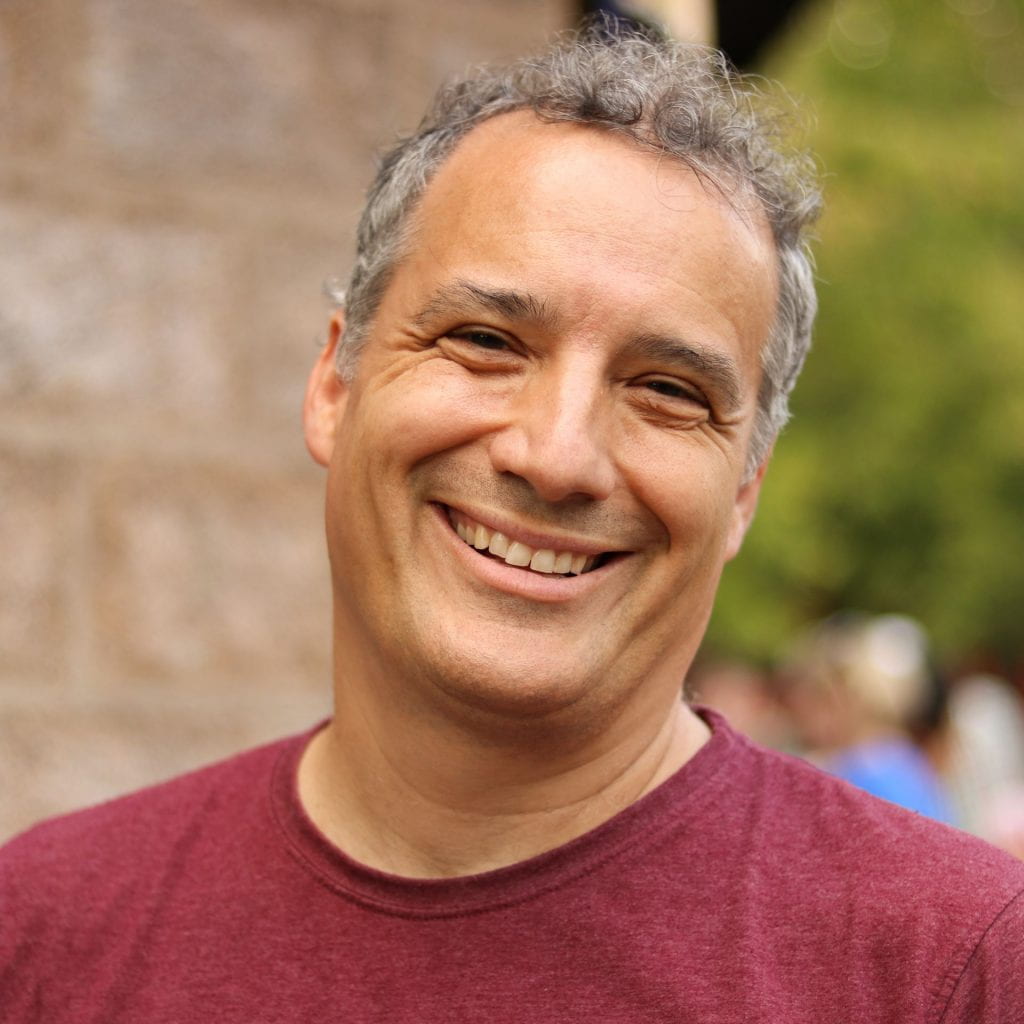
mugshot
Ziad Munson
Department of Sociology & Anthropology
Lehigh University
681 Taylor Street
Bethlehem, PA 18015
610-758-3821

I work in the Sociology and Anthropology Department at Lehigh University. I received my PhD in 2002 from Harvard University and my BA in 1993 from the University of Chicago. My professional interests lie in the areas of political sociology, social movements, the sociology of religion, and the sociology of the Middle East.

Curriculum Vita

Teaching

Brief descriptions and syllabi from my recent courses:

SSP313: Social Movements

Individuals in every society are enmeshed in powerful political, social and economic systems that are resistant to change. Occasionally, however, people do band together and challenge these systems: they picket, they march, they strike, they sit-in, they form protest organizations and demand change. This course is about such occasions. It explores six core questions about social movements: What are social movements? When do social movements occur? Who joins social movements? How are social movements organized? What are the strategies and tactics of social movements? What impact do social movements have? In answering these questions, the course touches on movements that are both historical and contemporary, progressive and conservative, American, foreign, and international. By the end of the semester, students are expected to have a basic understanding of the origins, dynamics, and consequences of social movements. They are also expected to have more in-depth knowledge of a particular movement on which they choose to focus over the course of the semester.

Social Movements syllabus (Spring, 2005)

SSP105: The Social Origins of Terrorism

What is terrorism and its causes?  This course explores the roots of terrorism sociologically.  It offers critiques of common theories of terrorism and presents several sociological lenses for better understanding the phenomenon socially, historically, politically, and religiously. Throughout the course students are given the opportunity to examine the actual ideas and texts that have been influential in mobilizing such violence. By the end of the course, students are expected to have a better understanding of the beliefs of terrorists, the conditions that produce and sustain terrorism, and the origins of political violence more generally.

The Social Origins of Terrorism syllabus (Spring, 2006)

SR381 & SSP401: Social Theory

An introduction to the main theoretical traditions in sociology. We read and discuss the original writings of the most influential theorists as well as examine how social theory is used in contemporary sociological research. An important element of the course is a focus on students developing social theories of their own. By the end of the course, students are expected to know some of the key insights of social theory and be able to themselves create testable theories about social problems and the world around us.

SR381- Development of Social Theory syllabus (Spring, 2005)
SSP401- Proseminar in Applied Social Theory syllabus (Fall, 2004)

SSP171: Religion and Society

What is religion? How does it relate to us as a society and as individuals? How has religion changed over time? This course examines both classical and contemporary approaches to defining and studying the role of religion in society. The emphasis is on understanding religious beliefs and practices in the United States, the sources and contours of religious change, and the effects of religion on individuals and society. Specific topics include religious fundamentalism, religious conversion, religious practices and authority, secularization, religion in public life, religion in social change, religious terrorism, and the ways in which religion impacts our personal health, educational attainment, and family life.

Religion and Society syllabus (Spring, 2006)

SSP104: Political Sociology

An introduction to political sociology through an examination of key issues surrounding power, politics, and the state. The course covers historical questions concerning state formation, nationalism, social movements, globalization, political culture and participation, and civil society.  Over the course of the semester students have the opportunity to explore these questions through examples such as racism, welfare reform, campaign financing, coal mining in Appalachia, revolution in Latin America, the rise of the Nazi party in Germany, and the place of the United States in a global society.

Political Sociology syllabus (Spring, 2002)

SSP090: The Politics of Morality in America

A course for freshmen that examines the social and moral debates that have become politically divisive in the United States. From pornography, sex education and gay rights, to capital punishment, abortion, physician-assisted suicide and gambling, we discuss the social origins of moral politics, the emergence and growth of social movements around these issues, and the ways in which battles over morality continue to shape our society. The seminar begins with a focused look at the abortion debate—one of the most divisive issues in the country today and the only issue over which public opinion has grown more polarized over the last thirty years-- but then broadens out to consider other moral issues selected by seminar participants.

Politics of Morality syllabus (Fall, 2004)