Army Nurse Corps Frequently Asked Questions

- General Questions
- Education/Clinical Training Questions
- Military Training Questions
- Personal Life Questions
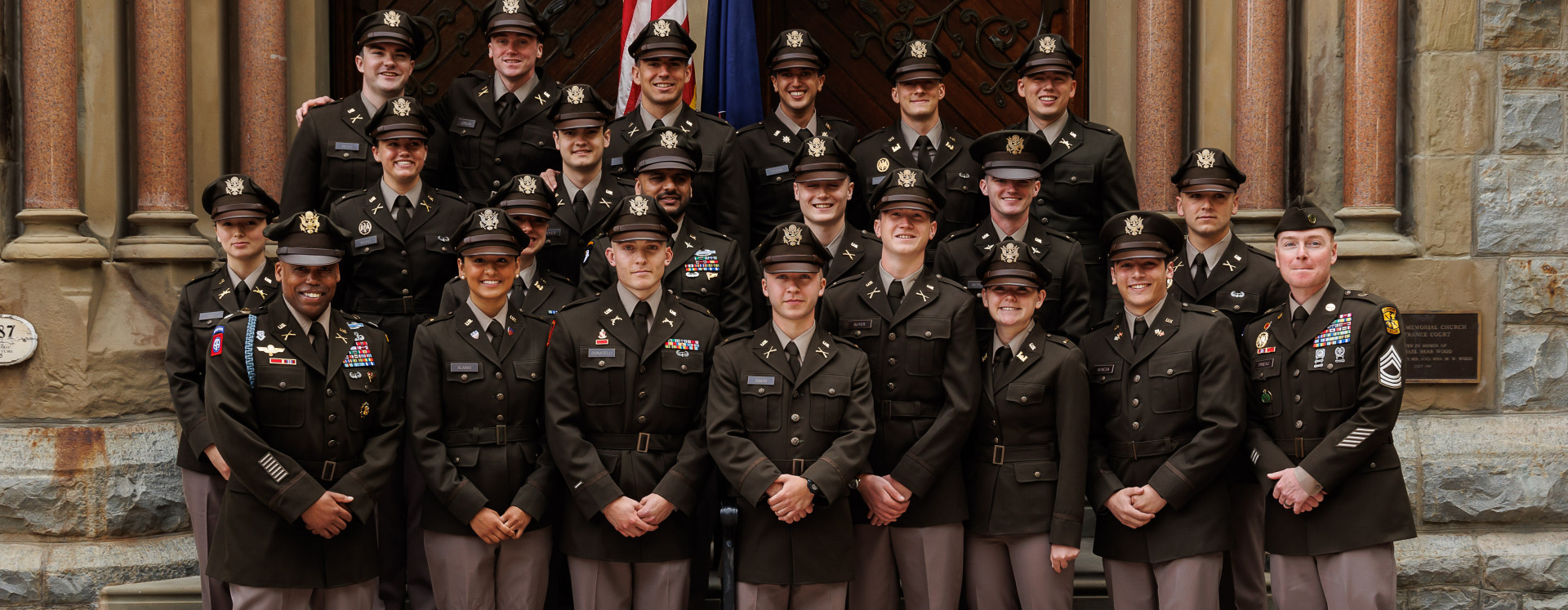
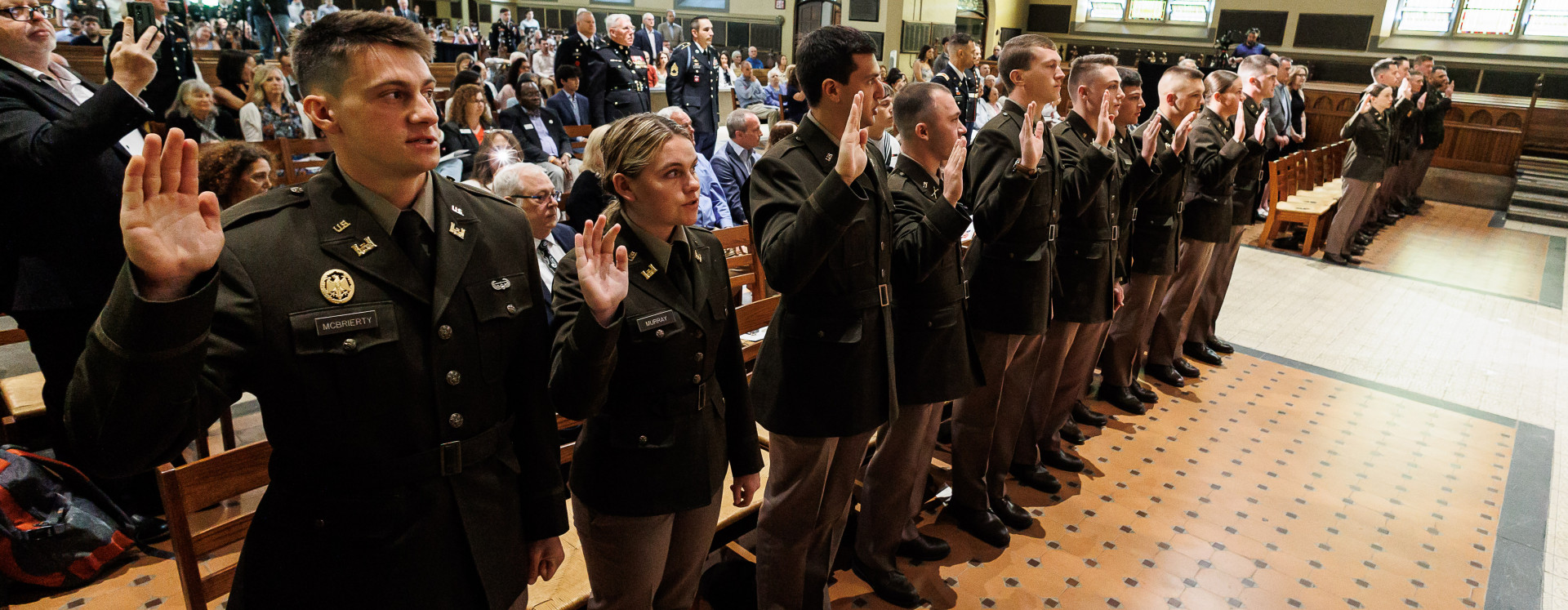
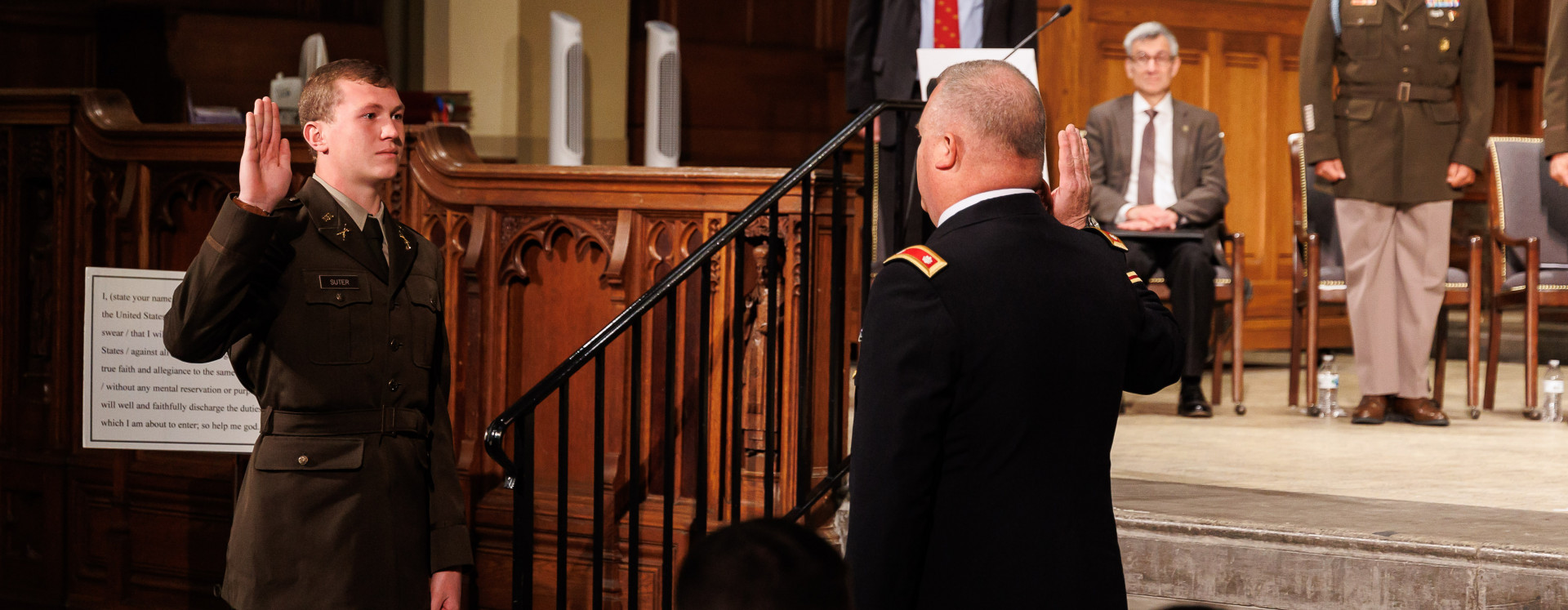
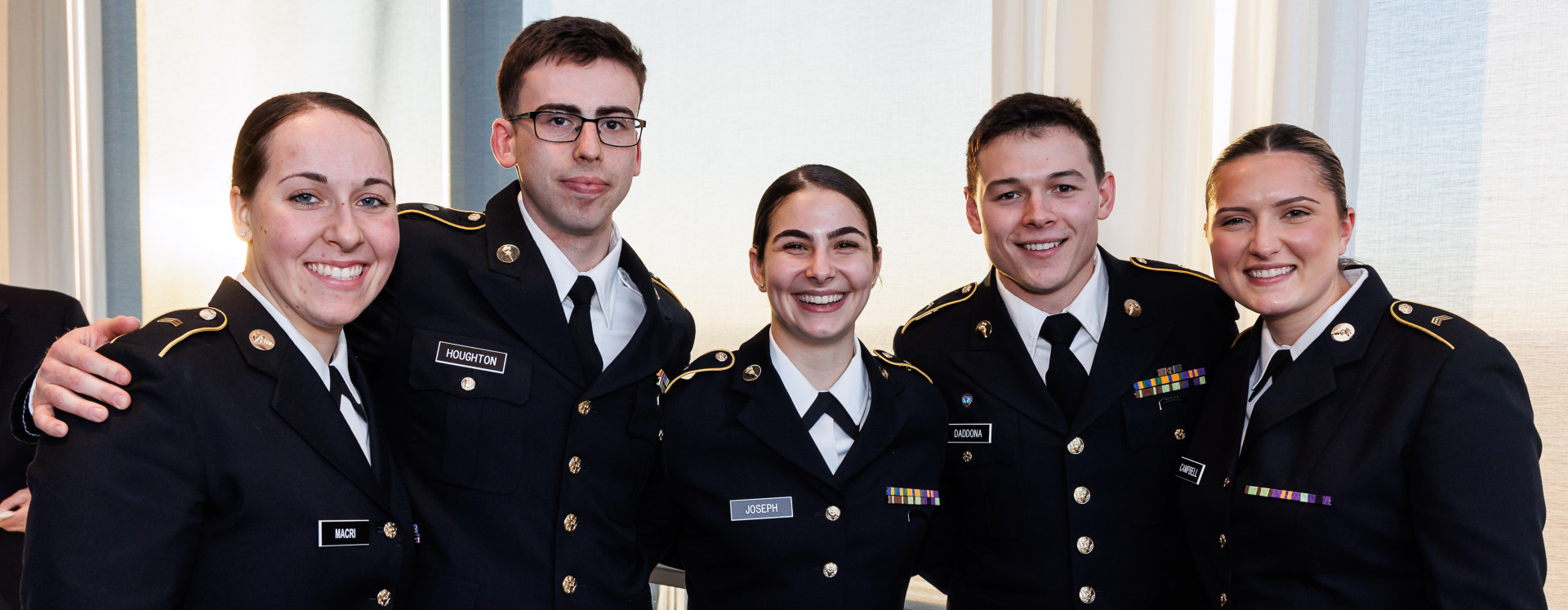
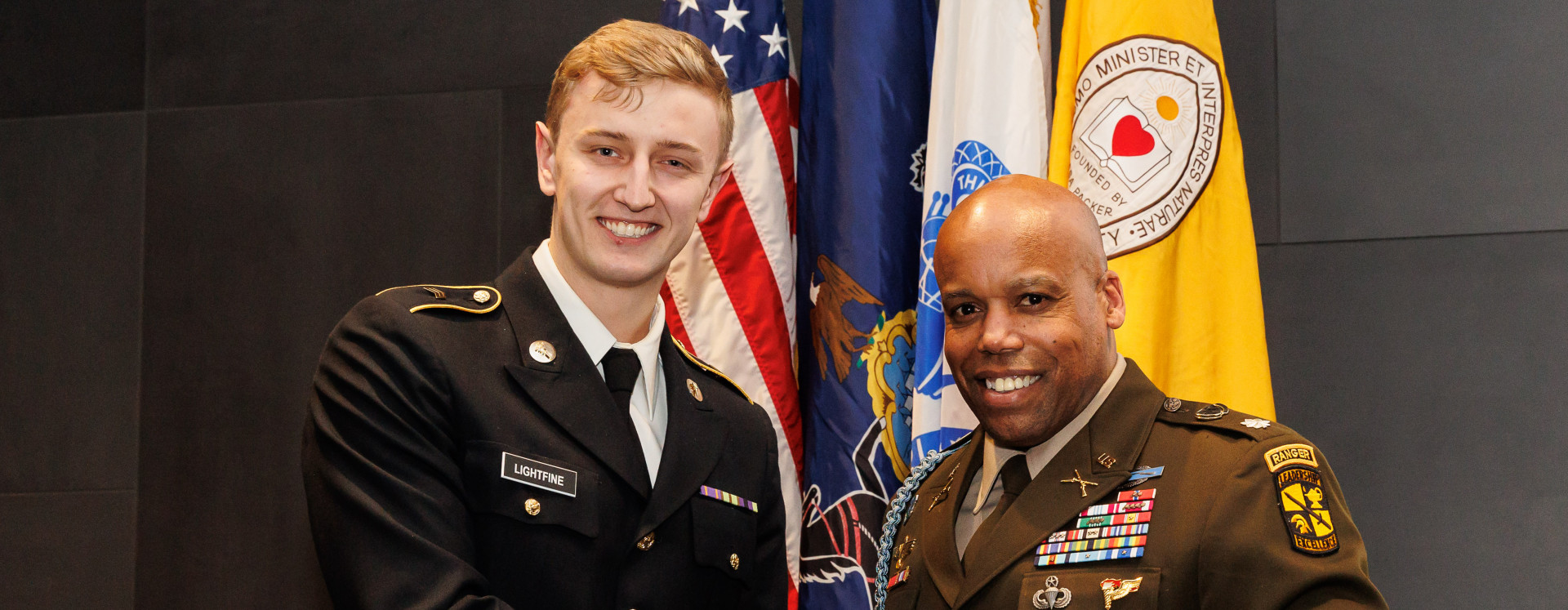
Lehigh Valley Army ROTC provides scholarship opportunities, leadership training, upper division placement, and a future career to college nursing students. Students may enroll as a freshman, sophomore, or as late as their junior year in college. Upon successful completion of the program, students are commissioned as officers in the Army Nurse Corps, and serve as nurses at military hospitals and medical facilities in the active Army, the National Guard, and the Army Reserves.
General Questions
What is Army ROTC?
Army ROTC is an elective curriculum you take along with your required
college classes. It prepares you with the tools, training and
experiences that will help you succeed in any competitive environment.
Along with great leadership training, Army ROTC can pay for your
college tuition, too. You will have a normal college student
experience like everyone else on campus, but when you graduate, you
will be an Officer in the Army - with job opportunities across the
globe, extensive benefits, and the chance to work in a dynamic and
fulfilling environment with one of the finest organizations in the
world.
What are the student's responsibilities?
If you want to try the program out first, there is no obligation for
taking the class during your Freshman and Sophomore year. It’s like
test driving a car. See if it’s for you. If not, drop it like any
other class.
- Attend ROTC classes (meets 1-2 times per week)
- Attend ROTC lab (once every other week)
- Attend physical training sessions (3 times per week depending on class standing)
- Attend field training exercises (twice a semester)
- Attend and successfully complete the Leadership Development and Assessment Course (5 weeks at Fort Lewis, WA) during the summer following the Junior year
- Maintain a GPA of 2.5
- Receive a Bachelor of Science in Nursing and pass the nursing state board examination (NCLEX)
How long do I serve as an Army Nurse Officer?
You can serve full-time in the Army for three years (four years for
scholarship winners). Selected Cadets may choose to serve part-time in
the U.S. Army Reserve or Army National Guard while pursuing a civilian
career.
Why join Army ROTC as a nursing student?
If you're considering an undergraduate Nursing degree, joining Army
ROTC can enhance your leadership skills and critical-thinking
abilities while providing financial support to help make your personal
and professional goals a reality. You will also find pride in knowing
you are preparing to serve your country as an Army Nurse Corps
Officer.
Why join the Army Nurse Corps as a nurse?
Being a Nurse in the Army provides you with opportunities not found in
the civilian world. As an Army Nurse and Officer, you will have the
respect of your peers and coworkers, as well as opportunities to train
and serve in a variety of specialties. The autonomy to practice
nursing as part of the Army Health Care Team is unlike most civilian
health care facilities. Your professional judgment will be the driving
force behind ensuring that all aspects of a patient's care are
addressed, and you'll be responsible for initiating coordination of a
patient's multidisciplinary care.
Education/Clinical Training Questions
What kind of degree must I obtain?
All Active Duty Army Nurse Corps officers are graduates of an
accredited BSN program and hold, at a minimum, the degree of BSN. The
United States’ Army Reserves selects both ADN/RNs and BSN/RNs into
their service.
What type of scholarships are potentially available and how
do I know if I qualify?
The Army ROTC program offers two-, three- or four-year scholarships
for undergraduate Nursing students. Scholarships pay 100% tuition and
mandatory fees, $1200 annual book costs, a monthly tax-free stipend
b/w $300-500, based on academic year, NCLEX fees, and NCLEX review
course tuition. These scholarships are extremely limited and subject
to funds availability. Therefore the are not guaranteed to be offered
on a continuous basis. The following criteria must be met to be
eligible for consideration:
- Be a U.S. citizen
- Be between ages 17 and 27 (must be 30 or younger when you graduate)
- Have a College GPA of at least 2.5 (must be competitive to progress within the school of nursing program)
- Have a high school diploma or equivalent
- Score minimum 920 on the SAT or 19 on the ACT
- Meet physical standards (pass the Army Physical Fitness Test)
- Be medically qualified (pass an Army physical)
- Agree to accept a commission and serve in the Army on Active Duty or in a Reserve Component (U.S. Army Reserve or Army National Guard)
What is the Nurse Summer Training Program?
Nursing students have the opportunity to attend the Nurse Summer
Training Program (NSTP) between their junior and senior years in the
nursing program. After completing the Leadership Development and
Assessment Course, nursing students can request to work in an Army
hospital for three weeks at locations across the globe, to include
Hawaii, Korea, Germany, and in the United States. Each student will be
assigned an Army Nurse Corps officer as their preceptor/instructor to
guide them through the nursing process. The student will learn
valuable management and leadership skills and have the opportunity to
apply them in a health care environment, setting themselves ahead of
their peers when they return to campus. The student can request to
work in the nursing specialty of their choice. Students are paid for
the three weeks, and all travel and room & board expenses are paid
for by the Army.
What if I want to get my Master’s degree?
The Army has a wonderful opportunity for those that wish to continue
their educational training. Each year, Army nurses are selected to
attend fully funded graduate training via the Long Term Health
Education & Training program. For 2005, 88 nurses were selected to
attend either a Master’s or Doctoral program. Each nurse will continue
to receive their full salary/benefits even though their job is to be a
full-time student and they will have their tuition paid by the Army.
What if I want to work in a clinical specialty?
The Army Nurse Corps has six clinical specialty training courses, in
addition to the Master’s training programs offered through the Long
Term Health Education & Training program. These specialty courses
are offered as 12-16 week, fully funded courses in the following
areas: Intensive Care, Emergency, Labor & Delivery, Psychiatric,
Community Health and Peri-operative Care.
When will I become a charge nurse or head nurse?
All new Army nurses will receive some type of organized hospital
orientation once they arrive at their first duty station. This
orientation can range anywhere from 3-8 weeks, depending on your
location and skill level. As soon as you complete orientation, you
will begin your training to learn the skills required as a Charge
Nurse. Most Army nurses will be able to function at that level by
about 6 months of training. The opportunity to become a Clinical Head
Nurse varies greatly from hospital to hospital throughout the Army and
there is no set time for gaining this position. You can become a head
nurse as early as 3 and as late as 12 years, but most hold the
position at the 5-7 year mark and last anywhere from 1-3 years in each
position.
Military Training Questions
Do I have to go to “boot camp”?
No. The Army ROTC program is an Officer commissioning program. “Boot
camp”, or Basic Training, is an enlisted Soldier training program. All
Army Nurse Corps Officers attend a specialized Officer Basic Course.
It is a 10-week school in San Antonio, Texas, where you learn the
basics about how to be an Army Officer. There is a limited (3-4 day)
field training exercise where you get your first chance to see what an
Army field hospital looks like. This exercise is a hands-on experience
of how medical care is delivered in a field setting.
Will I have to deploy?
Army nurses are an integral part of a medical team that is dedicated
to protecting the lives of those who safeguard America. As an Army
Nurse, there are possibilities to deploy to areas around the world in
support of military operations. These opportunities are sporadic and
vary in nature from providing hurricane relief support in the
Caribbean to supporting combat operations in Iraq. Even though the
media focus on the large number of military members deployed around
the world, there are actually very few Army nurses that are currently
deployed and, in a typical year, less than a hundred or so are
deployed around the world at any given time. An overwhelming majority
of your time as an Army nurse will be spent as a clinical nurse
working in a large, state-of-the-art medical facility. During those
rare times that you may be called upon to serve away from your
hospital, it will be because it is absolutely essential to have the
best medical care in the world available to those in need. Some
examples of those needing our expertise are: children who live in a
third world country that does not have the facilities or resources to
provide such simple life saving measures as administering
immunizations or performing cleft lip/palate repair; victims of
natural disasters that have no medical assets as the result of a
hurricane, tornado or tsunami; and the brave Soldiers that risk their
lives to defend and support freedom throughout the world who, once
wounded in combat, require immediate trauma resuscitation and medical
treatment to ensure a safe return home.
How much danger will I be in?
Although military operations can be extremely hazardous for those
folks that are on the front lines, it is actually relatively safe for
those supporting elements that are not directly involved in combat
operations, such as a hospital. The Army takes great measures to
ensure the safety of the medical facilities and personnel assigned to
each unit. As of November 1, 2005, there have been no fatalities
within the Army Nurse Corps in any military operations conducted as
part of the United States’ War on Terror. One Army nurse was quoted as
saying; "I’ve been an Army Nurse for 10 years. I have deployed
oversees to combat areas on two separate occasions and, in my travels,
have never felt that the Army has placed me in any more danger than
when I drive my car, fly in an airplane or walk alone through downtown
at night. There is, without a doubt, a need for medical personnel to
be there in order to save lives. This overwhelming need far outweighs
the unlikely chance of danger."
What is a "field hospital"?
A "field" hospital is what the Army uses as a deployable medical
facility. They are basically tents that are moved via rail/ship/truck
and set-up by the personnel assigned to each facility. They range in
size from 296 to 500 beds and are fully equipped with lights,
ac/heating units, running water, dining and laundry/bath facilities.
These hospitals are capable of performing life-saving surgeries,
emergency care, peri-operative care, intensive care, inpatient ward
care, x-rays/CT scans, laboratory/blood bank services, dental repair,
physical therapy and pharmaceutical services. When these services are
no longer necessary, the hospital is taken down, packed up and
returned to a storage facility.
How often do I have to do physical training?
The Physical Training, or PT, schedule is dependent on your ROTC
department. PT is usually 3 times per week and the schedule will be
arranged around your clinical class schedule. Once on active duty,
Army nurses work in a hospital and have rotating day/night shifts that
last 8 or 12 hours. Due to 24-hour operations, Army hospitals do not
conduct organized PT on a regular basis. Organized PT sessions do
occur in May and October each year so all staff can participate in the
required Army Physical Fitness Test, or APFT. Therefore, your physical
training and preparations for the APFT are done on an individual basis
that best fits your work/sleep schedule.
Personal Life Questions
What if I want to get married?
What happens to my spouse? Many Army Nurse Corps Officers (about 67%)
are married and have children. As an Officer in the Army, your family
will be allowed to move with you to your duty assignment. Of our
married Officers, many are married to other service members. If that
is the case, there are Army programs available to ensure you and your
spouse are located together at an Army post.
Do I have to live in open barracks and use community showers?
No. As an Army Officer you will be able to afford comfortable housing
either on or near the Army installation to which you are assigned.
How often do I have to move?
As an officer in the Army, you typically move from one duty location
to another every 3-4 years. The Army will take care of your moving
expenses and provides additional funding for travel, lodging and meal
costs during your move. In addition, a contracted moving agency will
come to your home, pack/ship your belongings, deliver them once you’ve
found your next home and unpack/remove all unwanted packing materials
from your home.
Where will my first duty assignment be located?
There are 26 military hospitals throughout the U.S, Korea and Germany.
Most are located within the continental United States. During your
senior year, you will request an assignment at the hospital that you
would like to be assigned. The Army Nurse Corps works extremely hard
to ensure all the new graduates receive one of their top three choices
of location assignments.
What if I don’t want to move to where the Army wants to send
me?
If you are assigned to an area that doesn’t suit your needs, each Army
nurse has an Army Nurse Corps branch manager who works with each
individual to find a location that will make him/her happy while
providing the necessary opportunities for career advancement within
the Army Nurse Corps and, also, meet the needs of the Army. Once you
have met your active duty obligation incurred during ROTC, you have
the option of resigning from active duty and either remaining where
you are currently located or having the Army move you home.